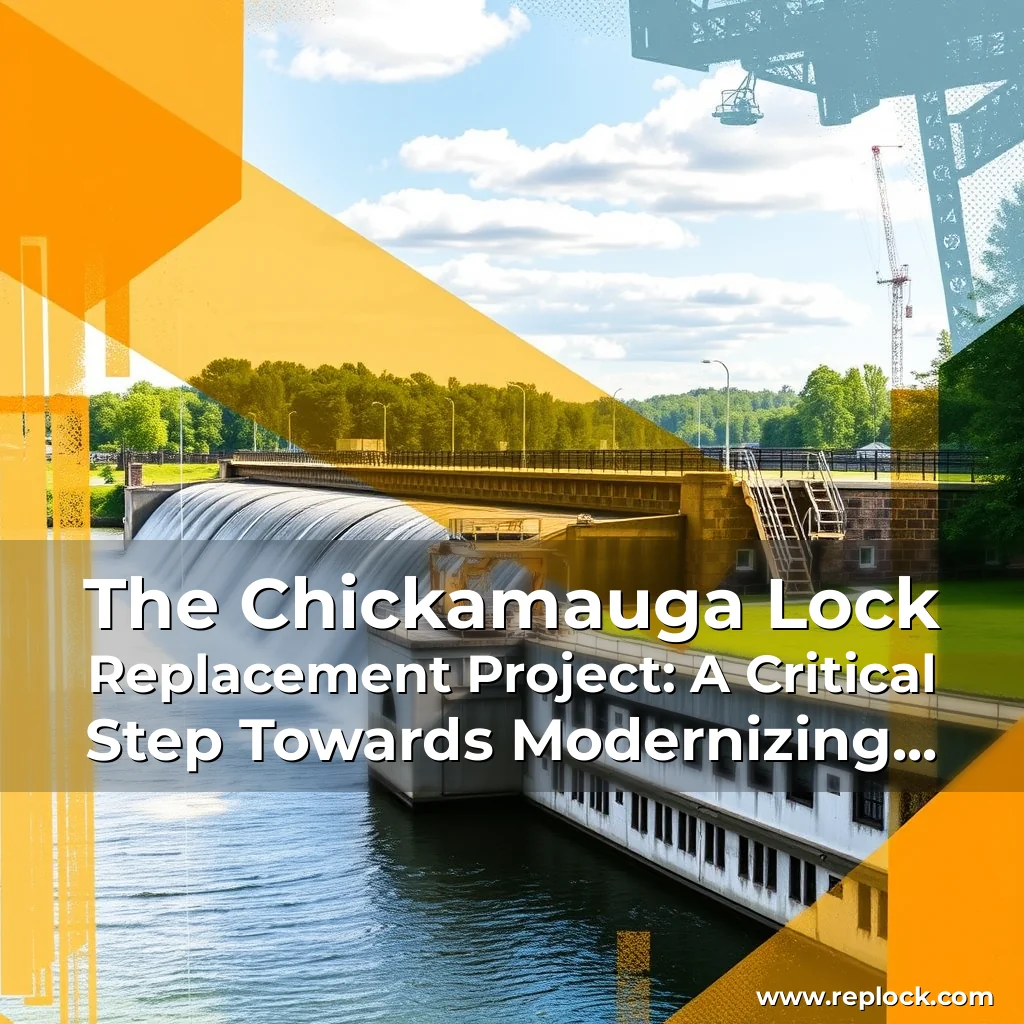
The U.S. Army Corps of Engineers Nashville District, in partnership with Shimmick Construction and Tennessee Valley Authority, recently began erecting massive miter gates for the Chickamauga Lock Replacement Project. This milestone marks a significant step towards modernizing regional infrastructure and ensuring the long-term reliability and efficiency of the Tennessee River navigation system. The project, which began in December 2024, aims to replace the existing 1940 lock with a new 110-foot-wide by 600-foot-long navigation lock. The new lock will hold nine barges per lockage, increasing capacity by 80 percent and significantly reducing transit times for commercial vessels. The expected operational status is in 2028, providing a major boost to both the regional and national economies.
Key Components of the Miter Gates
•
•
•
Kyle Phillips, technical lead for the U.S. Army Corps of Engineers Nashville District, praised the expertise and coordination required in mega infrastructure projects. He stated that seeing the massive gate pieces lifted and assembled into place is a testament to the complexity and intricacy of the project.
The Benefits of the New Lock
•
•
•
The Chickamauga Lock Replacement Project is critical to ensuring the long-term reliability and efficiency of the Tennessee River navigation system. The project has been recognized for its potential to significantly reduce transit times for commercial vessels, providing a major boost to both the regional and national economies.
Construction Progress and Timeline
| Task | Progress | Timeline |
|---|---|---|
| Installation of miter gate pieces | Current | End of 2025 |
| Welding of miter gate pieces | In progress | End of 2025 |
The construction process is currently underway, with crews using a large-capacity crane to carefully lift and position each gate piece into its final location within the lock chamber. The miter gate assembly for the downstream and upstream sides of the lock is expected to be completed by the end of 2025.
Quotes from Project Stakeholders
“Seeing these massive gate pieces lifted and assembled into place is truly a testament to the expertise and coordination required in mega infrastructure projects. This process marks a significant achievement in the progress of the Chickamauga Lock Replacement Project and brings us closer to project operational status.” – Kyle Phillips, technical lead for the U.S. Army Corps of Engineers Nashville District
“The Chickamauga Lock is a vital link in our nation’s inland waterway system, and this project will ensure its continued reliability for decades to come. The economic benefits will be felt throughout the region and beyond.” – Bob Winters, project manager for the U.S. Army Corps of Engineers Nashville District
Conclusion
The Chickamauga Lock Replacement Project is a critical step towards modernizing regional infrastructure and ensuring the long-term reliability and efficiency of the Tennessee River navigation system. The project aims to increase capacity by 80 percent and significantly reduce transit times for commercial vessels, providing a major boost to both the regional and national economies. The construction progress is expected to be completed by the end of 2025, with the new lock expected to be operational in 2028.

news is a contributor at RepLock.com. We are committed to providing well-researched, accurate, and valuable content to our readers.