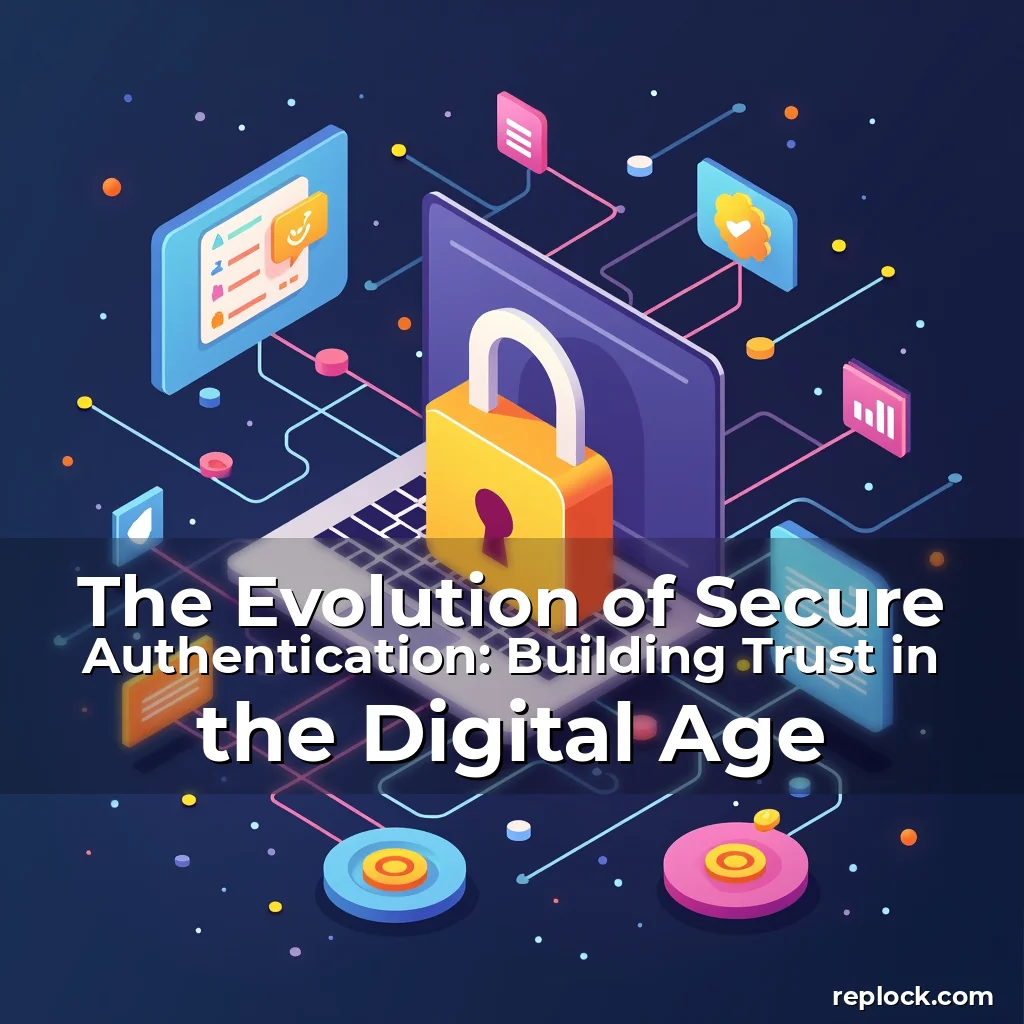
The Evolution of Secure Authentication: Building Trust in the Digital Age
In an era where data breaches are increasingly common and cyber threats evolve at lightning speed, securing user identities has become more critical than ever before.
Secure authentication is the foundation upon which trust is built between users and digital services, ensuring that sensitive information remains protected from unauthorized access.
The Foundations of Modern Authentication Systems
Authentication systems have come a long way since the days of simple usernames and passwords, evolving into complex mechanisms designed to protect against sophisticated attacks.
Todays methods incorporate multi-factor authentication (MFA), biometric verification, and behavioral analysis to create layered defenses against identity theft and fraud.
At their core, these systems rely on three primary factors: something you k
Passwords: The Double-Edged Sword of Access Control
Despite being widely used, traditional password-based authentication is inherently vulnerable due to human behavior and technical limitations.
Password reuse across different platforms increases risk exponentially, as a single breach can compromise multiple accounts simultaneously.
Weak passwords such as “password123” or “qwerty” offer minimal protection against automated brute-force attacks.
Studies show that over 80% of hacking-related breaches involve weak or stolen passwords, highlighting the urgent need for stronger alternatives.
Multi-Factor Authentication: A Layered Defense Strategy
MFA adds essential security layers by requiring two or more independent credentials to verify identity, significantly reducing the likelihood of successful attacks.
Common MFA implementations include SMS codes, hardware tokens, mobile authenticator apps, and biometric scans through fingerprint or facial recognition technology.
- Time-Based One-Time Passwords (TOTP): These generate temporary codes every 30 seconds using algorithms synchronized with servers.
- Hardware Security Keys: Physical devices like YubiKeys provide cryptographic signatures that are extremely difficult to spoof.
Organizations implementing MFA see up to a 99% reduction in account takeover incidents compared to those relying solely on passwords.
Biometrics: Beyond Traditional Verification Methods
Biometric authentication leverages unique physical characteristics to confirm identity, offering convenience without compromising security when implemented properly.
Fingerprint scanners, iris recognition systems, and voice pattern analyzers have become standard features in smartphones and high-security environments alike.
Cryptographic hashing ensures that biometric templates stored digitally cannot be reverse-engineered back into usable biological data.
However, concerns remain regarding the potential misuse of biometric databases by malicious actors or government entities.
Behavioral Biometrics: The Invisible Guardian
This emerging field analyzes patterns in how individuals interact with devices – typing rhythm, mouse movement, swipe gestures – to detect anomalies indicative of fraudulent activity.
Digital footprints created during regular usage help establish baseline behaviors that deviate significantly from normal patterns raise red flags automatically.
Unlike static biometrics, behavioral analytics continuously adapts to changes while maintaining strong security postures through machine learning models.
Financial institutions already employ this technique extensively to flag suspicious transactions in real-time before they occur.
Passwordless Authentication: Redefining Identity Verification
Passwordless solutions eliminate reliance on memorized secrets entirely, instead using cryptographic keys tied securely to trusted devices or verified phone numbers.
These approaches often combine FIDO2 standards with Public Key Cryptography to enable seamless yet highly secure logins without exposing private information.
Users benefit from simplified workflows while organizations gain improved security metrics related to phishing resistance and credential stuffing attempts.
Pilot programs indicate that passwordless methods reduce support costs by approximately 60% due to fewer issues arising from forgotten credentials.
Zero Trust Architecture: Reimagining Network Security Principles
Traditional perimeter-based security models assume internal networks are safe spaces; Zero Trust challenges this assumption by verifying everything constantly regardless of location.
In practice, this means continuous authentication checks apply equally whether accessing resources locally or remotely via cloud infrastructure.
Microsegmentation techniques break down network boundaries into smaller zones requiring separate authorization before granting any level of access.
Combined with adaptive authentication policies based on risk assessments, Zero Trust creates robust defense-in-depth strategies against insider threats and external intrusions.
Securing Authentication Flows Against Common Threats
Attackers frequently exploit vulnerabilities within authentication processes themselves rather than focusing purely on endpoint protections.
Phishing campaigns specifically target login pages through deceptive URLs mimicking legitimate service providers to steal credentials unknowingly.
Social engineering tactics manipulate users into revealing sensitive information under false pretenses, making awareness training crucial components of overall strategy.
Implementing strict validation rules for incoming requests helps prevent session hijacking by detecting irregularities in device fingerprints or IP geolocation mismatches.
Evolving Standards and Industry Best Practices
Ongoing development in open-source projects continues shaping future directions for secure authentication technologies globally.
Standards bodies regularly update guidelines reflecting new research findings about threat landscapes and mitigation effectiveness.
Adopting frameworks like NIST’s SP 800-63B provides structured approaches aligned with current best practices across industries varying from healthcare to finance sectors.
Regular audits combined with penetration testing ensure compliance with regulatory requirements while identifying areas needing improvement proactively.
Future Trends Shaping Secure Authentication Landscapes
Rapid advancements in artificial intelligence promise enhanced capabilities for both attackers and defenders in coming years.
Quantum computing poses significant risks to existing encryption schemes necessitating early adoption of quantum-resistant algorithms now.
Decentralized identifiers (DIDs) powered by blockchain technology may revolutionize personal data management giving individuals greater control over their digital identities.
As global regulations continue tightening around privacy laws like GDPR, innovative solutions must balance stringent requirements with practical implementation realities.
Conclusion
Secure authentication represents a dynamic intersection between technological innovation and cybersecurity fundamentals essential for protecting digital ecosystems effectively.
By embracing modern authentication methodologies alongside proactive risk management strategies, organizations can build resilient infrastructures capable of withstanding evolving threats confidently.

news is a contributor at RepLock.com. We are committed to providing well-researched, accurate, and valuable content to our readers.